
Pellet 3D Printing Calibration

Bead Characterization System (BCS)

Calibration method of collecting critical data points that characterize the bead deposited from the head of a 3D printing extruder, relative to the remaining process parameters of the 3D printing system.

Juggerhead

Data Driven Processing

Overcoming Obstacles in Pellet 3D Printing

When running a new material, operators/process engineers need to build consistent throughput from their extruder (“Extrusion Parameters”). They’ll do that by adjusting the extrusion speed. Ranges may exist for a specific material – extruder- nozzle relationship. It may take days for a highly skilled operator to identify the limits for each specific combination. That's where we come in.

seperator-prism

After initial parameters have been created through JuggerBot 3D’s Material Testing & Assessment procedure, the Bead Characterization System is used to generate and print specific paths of varying parameters.

Some factors to consider are:
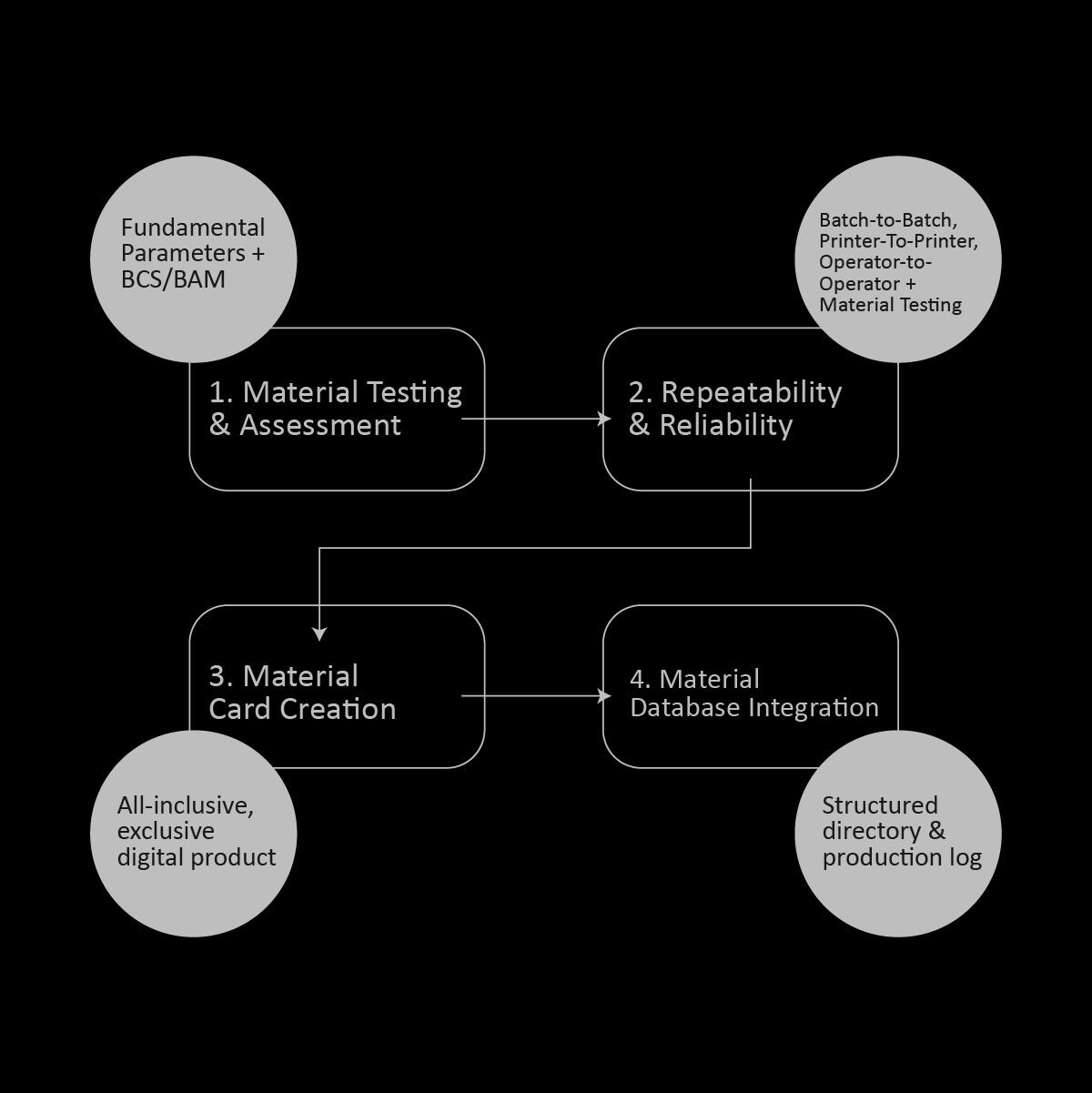
Pellet 3D Printing Data Driven Processing Workflow

Calibration in Practice

Utilizing JuggerBot 3D’s Bead Characterization System

seperator-prism

A single path consisting of multiple legs representing a specific relationship between the material, the machine configuration, and the printing parameters is printed.

The results are then interpreted, either manually or through the use of a laser profilometer, and the “best” leg is selected.

The input of data then proliferates an entire set of parameters, utilizing a proprietary algorithm developed by JuggerBot 3D.
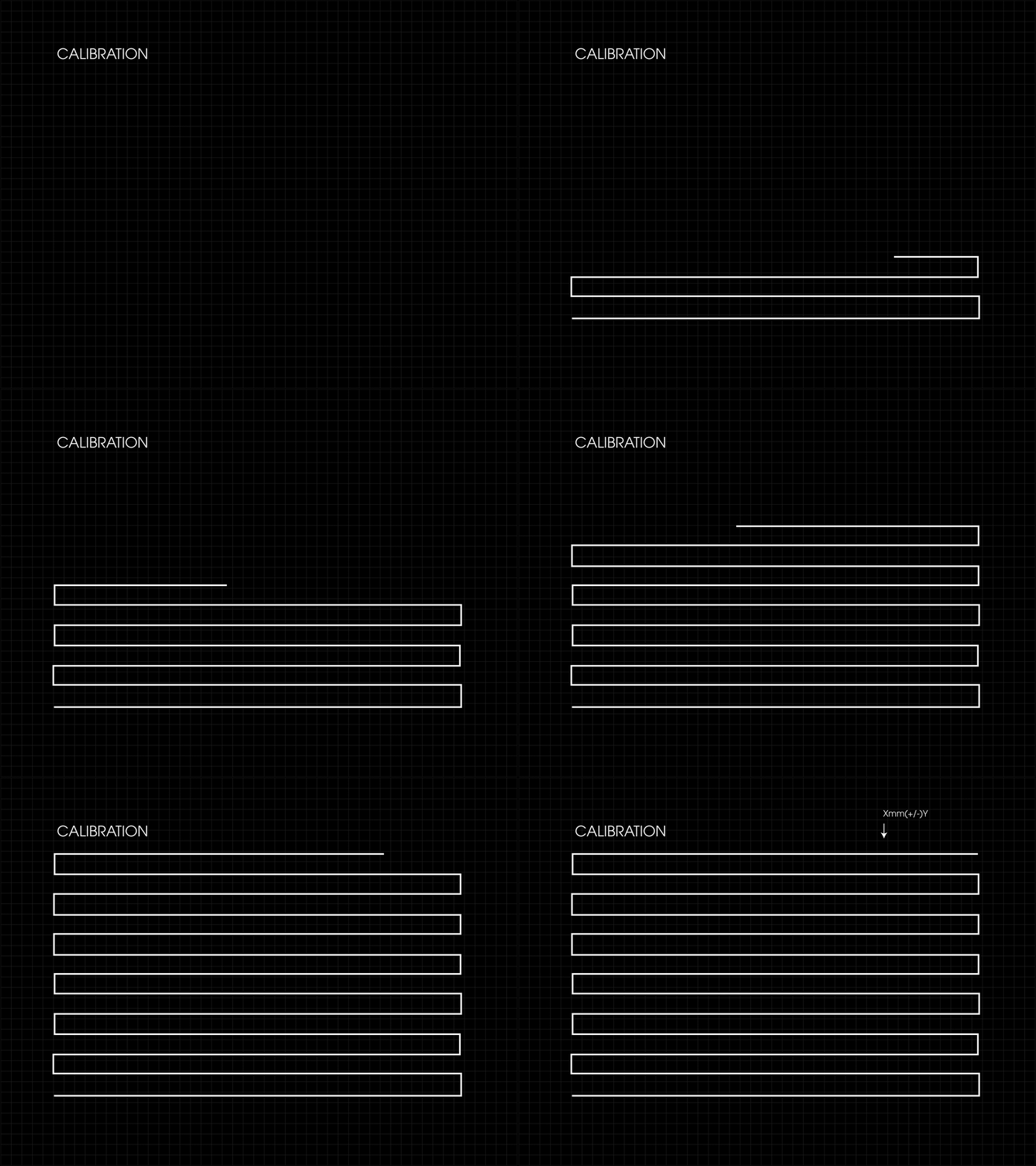
 

Calibration-GIF

Additional Resources & Technologies

Achieve a greater understanding of how these processes work together
to produce a Large Format 3D Printing Production Workflow through the
JuggerBot 3D Material Card.


Material Testing & Assessment (MT&A)

The first step to set up a production workflow.

Developing 3D printing parameters for new materials can be challenging and timely. Thankfully, JuggerBot 3D’s Material Testing & Assessment procedure can be performed in short time through six simple steps:

- Perform Moisture Analysis
- Establish Extruder Settings
- Pinpoint Deposit Rates
- Layer Time Identification
- Bead Characterization
- Printing of Test Specimens

Bead Area Mode (BAM)

Once the BCS operation is complete, an operator can simply designate the specific bead width and layer height desired, and the remainder of the parameters are set based on the BCS data. This results in a significantly faster process that’s better fit for the dynamic nature of pellet-fed additive manufacturing.

By pairing the BCS data with BAM tool pathing, we enable data-driven additive manufacturing.


Both the Bead Characterization System (BCS) & Bead Area Mode (BAM) are critical points in our Material Card. For more information click the link.