
BLOG
Emerging Applications for Thermoset 3D Printing: Understanding Direct Ink Writing
Understand how Direct Ink Writing (DIW) is expanding the capabilities of thermoset additive manufacturing through functional silicones, epoxies, vinyl esters, and more.
By Ben Toomey
June 8, 2026
Thermoplastics have largely defined modern additive manufacturing (AM). These materials have aided in establishing AM across prototyping, tooling, and industrial production, but they do not represent the full scope of industrial polymer systems.
As industrial applications grow and continue to demand more tailored performance characteristics, manufacturers are beginning to evaluate AM through a broader materials perspective. One area receiving increasing attention is thermoset additive manufacturing.
Through processes such as Direct Ink Writing (DIW), reactive material systems have been developed to deposit silicones, epoxies, urethanes, and composite materials, producing structures that meet manufacturer requirements for silicone 3D printed gaskets, autoclave ready tools, and more.
Understanding Direct Ink Writing
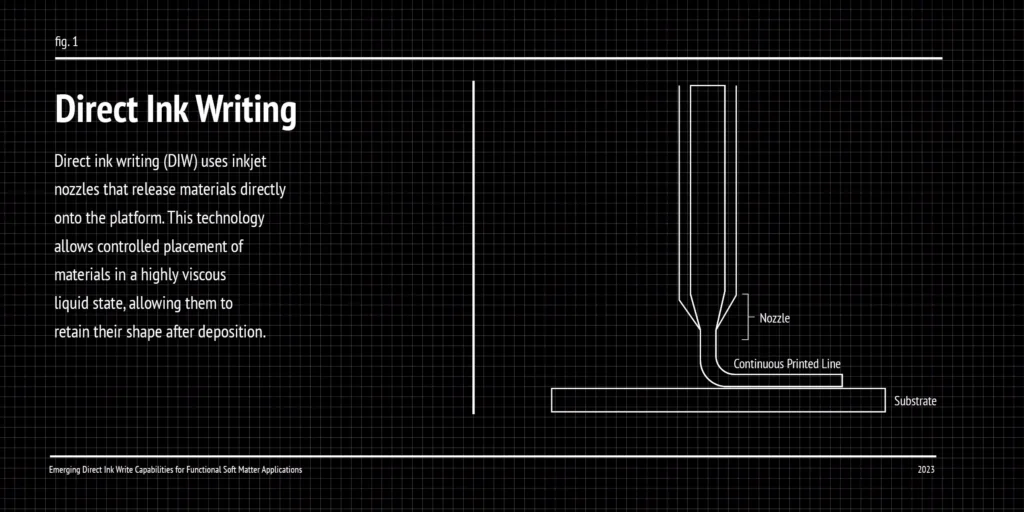
Direct Ink Writing is a material extrusion-based AM process that deposits viscous materials (inks) or pastes through a controlled nozzle system to build structures layer-by-layer.
In many DIW systems, deposition occurs through either single or multi-component material systems that meter reactive chemistries at controlled ratios before deposition. In two-part systems, materials are often combined through static or dynamic mixing systems immediately prior to deposition.
Unlike thermoplastics, which melt, soften, and cool during deposition, thermosets rely on chemical curing reactions that permanently crosslink the deposited material.
Our team generally explains crosslinking by comparing an ice cube and an egg.
Ice can repeatedly melt and refreeze while remaining mostly the same material system. Thermoplastics behave similarly, allowing the material to repeatedly soften and resolidify under heat.
An egg behaves differently. Once cooked, albumin heats and permanently changes. Thermosets follow a similar concept during curing, forming a chemically bound, crosslinked structure that cannot be remelted or reprocessed. You cannot un-cook an egg, and you certainly cannot re-melt a cured thermoset. Curing of these chemistries can occur in multiple ways. Commonly used methods include thermally curing the polymer, UV curing, ambient curing, or snap curing. There is high criticality in the interaction between deposition behavior, control, viscosity, and curing mechanics for successful thermoset additive manufacturing.
Materials in Thermoset 3D Printing
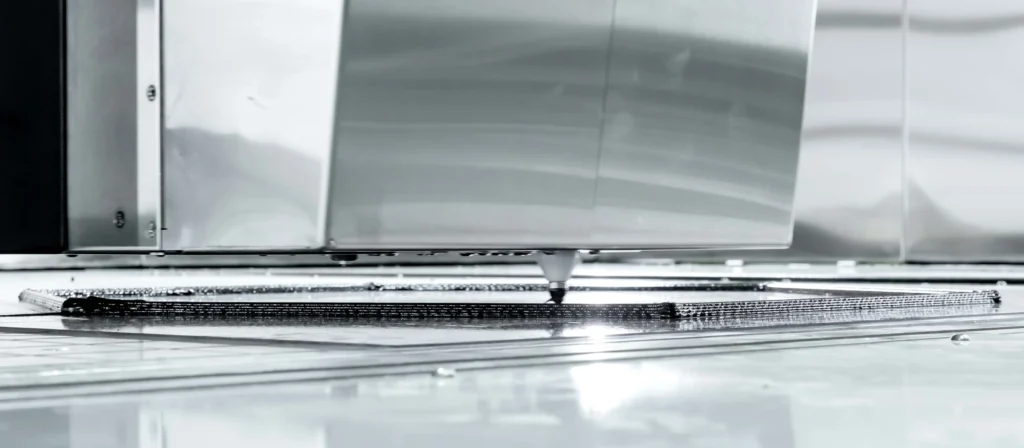
DIW processes engineered materials that flow under pressure while maintaining shape after extrusion. The behavior of each material is governed by its inherent rheology, system process control, and its response to curing.
This process opens the door to material systems that are traditionally difficult to process through traditional extrusion-based print methods, including:
Silicones
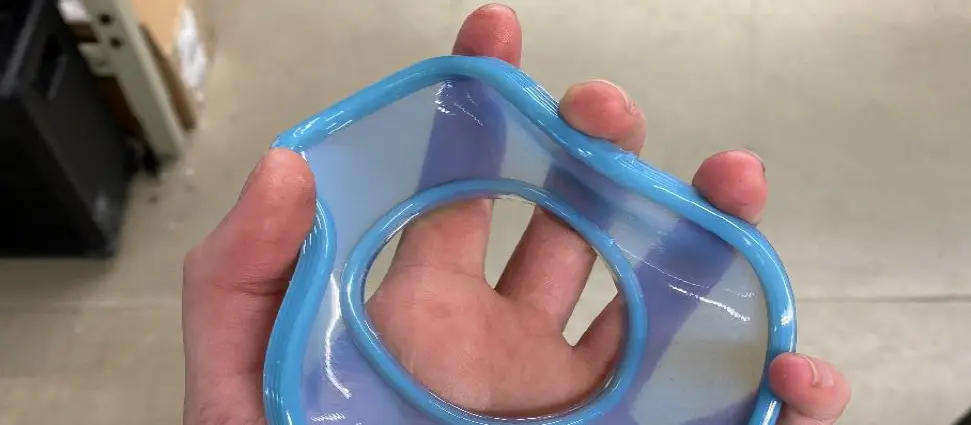
Silicones are among the more widely recognized thermoset materials for AM adoption due to their greater flexibility and temperature stability. These materials are often evaluated for field use of elastomeric seals & gaskets and soft robotic structures.
Silicones can also support multi-durometer printing. In multi-durometer printing, soft and rigid materials can be combined within a single structure to tailor parts with both flexibility and structure.
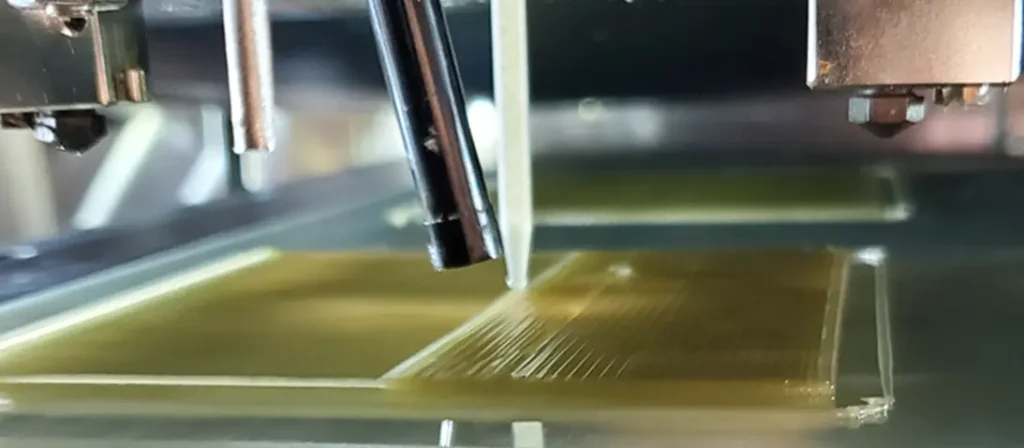
Epoxies
Epoxy materials are commonly associated with structural performance, adhesion, and chemical resistance. Many epoxies are associated with home repair components where adhesion and bond strength are vital. In AM, epoxy-based thermosets are being explored for composite tools, reinforced fixtures, and applications where parts go under high degrees of stress.
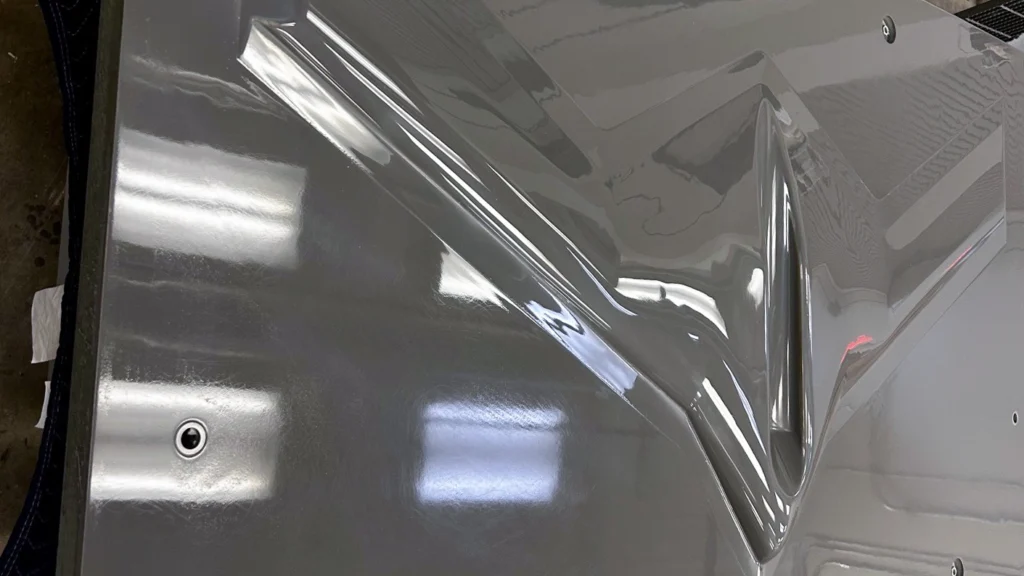
Vinylester and Composite Materials
Larger degrees of attention are being driven to synthetic vinylester resins and reinforced composites due to their corrosion and temperature performance, making them ideal for structural and tooling parts in high-demand applications. Companies such as Polynt Group, in collaboration with research institutions like Oak Ridge National Laboratory, have led development efforts in this area. Filled and reinforced systems may include additional ceramic particulates, fiber reinforcement, conductive fillers, and more.
Formulations such as these continue expanding the range of material properties and performance characteristics through additive manufacturing capabilities.
Why Thermosets Matter in Additive Manufacturing
Thermosets matter because many industrial applications rely on material properties that extend outside of the performance range of thermoplastics.
As AM continues expanding into more production settings, interest in thermoset-compatible processes has increased alongside demand for materials that extend beyond conventional thermoplastic properties. The wide range of thermoset resins has the capacity to offer advantages in areas such as:
- Thermal Resistance (HDT/CTE)
- Chemical Resistance
- Environmental Durability
- Increased Isotropy
- Elastomeric Properties
This, however, does not position thermoset AM as a replacement for thermoplastic. Rather, the two processes are increasingly becoming complementary tools suited for different material requirements and application environments.
Emerging Applications in Thermoset 3D Printing
As DIW continues to mature, thermoset additive manufacturing is actively being evaluated across applications for several verticals.
*Note: Many of these applications prioritize functional material properties and manufacturing flexibility over visual complexity.
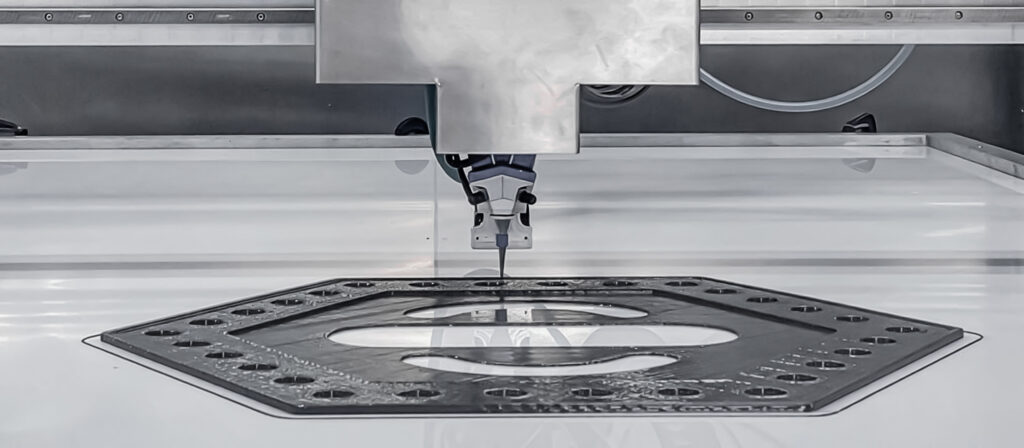
Elastomeric Seals & Gaskets
One of the more practical applications for DIW. Many sealing applications require complex geometries, often tagged with properties such as chemical resistance and thermal stability. Research efforts have already demonstrated DIW-produced aerospace seal geometries and multi-durometer gasket structures that combine flexible regions within a single print.
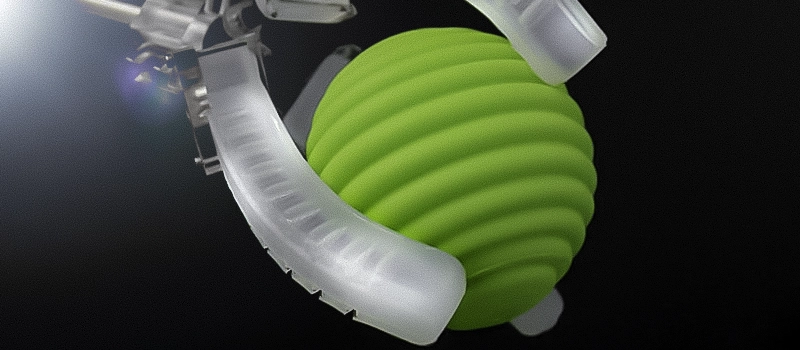
Soft Robotics
Robotic end effectors and end-of-arm tooling that require compliant interaction between robotic systems and complex surfaces are low-hanging fruit for thermoset materials. Unlike rigid mechanical grippers or traditionally machined parts, soft materials such as silicones can deform and compress around irregular geometries while reducing stress on sensitive surfaces.
Because DIW enables controlled deposition of elastomeric materials (such as silicones) with variable mechanical behavior, manufacturers can tailor flexibility and structural response directly into the printed geometry.
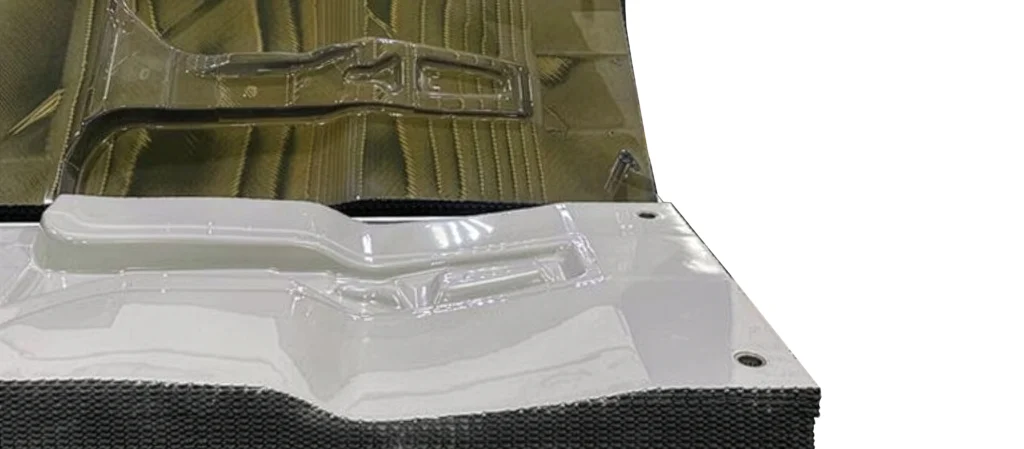
Composite and Tooling Applications
Thermoset-compatible additive workflows closely align with composite manufacturing. Materials with deep thermal properties, such as Vinyl Esters, can be applied for autoclave environments and other vacuum tooling processes.
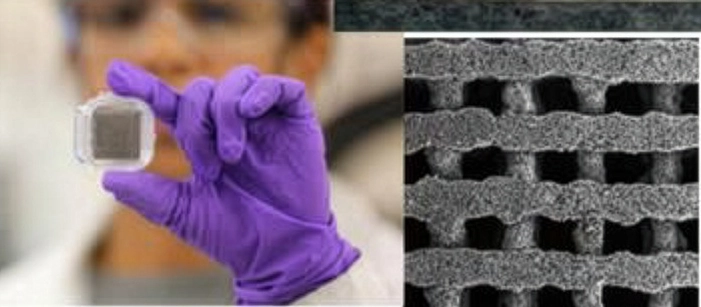
Defense and Energy
DIW is currently being explored for applications where durability, material customization, and application-specific geometries are best fit for thermoset materials. It can also be considered how specific geometric configurations can create mechanical metamaterials. These tailored structures have the potential to create structures with properties not typically found in nature, such as enhanced acoustic damping or programmed energy absorption. Areas of interest in this sector include:
- Energetic Material Research
- Propellants
- Lightweight/Highly Absorbent Body Armor
Challenges in Thermoset Additive Manufacturing
Despite the level of research and industry interest in this process, thermoset additive manufacturing still presents its fair share of challenges. There are requirements for environmental control, material flow, and deposition stability, but thermosets present other unique challenges within these process controls.
Material and Mix Control
Thermoset systems rely on tightly controlled reactive chemistries prior to deposition. Small inconsistencies in the mix ratio or flow behavior can directly affect mechanical performance, layer adhesion, and cure consistency.
Print Stability
Direct Ink Writing is heavily governed by the rheology of the chosen material. Materials need to flow predictably through the dispensing system while retaining stability after deposition to maintain geometry and layer integrity. Ensuring areas such as gelation timing and balancing overall viscosity remain central challenges for thermoset AM.
Curing
Because of the chemical reaction after mixing, cure management can become critical in terms of both part integrity and safety. Improper thermal or environmental control may contribute to potential thermal runaway or residual stresses concerning the part.
Outlook of DIW in Manufacturing
The long-term relevance of thermoset AM will likely be driven less by novelty and more by industrial alignment over time. As with most emergent technologies, research institutions and public-sector enablers will drive further development. Maturity will depend on adoption from industry involvement at the application level.
Many industries already depend on thermoset chemistries for performance-critical applications involving heat, chemicals, and structural durability. Direct Ink Writing introduces a manufacturing throughline that can integrate these polymers into additive-focused workflows.
Rather than competing directly with thermoplastic AM, thermoset workflows are more likely to expand the overall material and application range of materials and applications available to additive manufacturing, complementing rather than competing with existing thermoplastic processes.