
BLOG

Thermoplastic vs Thermoset Large-Format 3D Printing: A Comparison
Thermoplastic and thermoset LFAM systems differ in how they process materials, control part geometry and support production. Here is what manufacturers should consider when selecting the right approach for an application.
By Ben Toomey
October 2, 2026
Large-format additive manufacturing is entering a diverse stage of development. Thermoplastic 3D printing remains the more established approach for producing large tools, structures and end-use components. Advancements in thermoset 3D printing are creating new options for reactive materials and chemically demanding applications. These processes can overlap, but they differ considerably in throughput, material handling, system architecture and quality control. Understanding where thermoplastic and thermoset LFAM systems align and where they diverge can help manufacturers select a process based on application requirements.
Thermoplastic vs. Thermoset 3D Printing: Key Differences
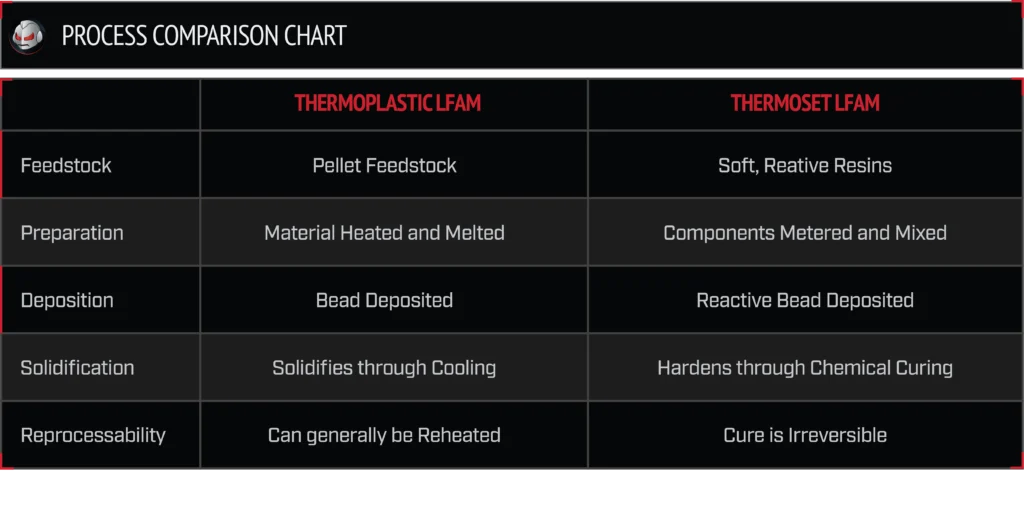
At large-format scale, how polymers solidify directly influences production. Thermoplastic LFAM melts pelletized materials in an extruder, deposits them as beads and allows them to solidify through cooling. This process supports a broad range of materials and extrusion system architectures, particularly for applications that prioritize throughput and large near-net geometries.
Thermoset LFAM, otherwise known as Direct Ink Writing (DIW), deposits a flowable resin that hardens through an irreversible chemical reaction. This can be illustrated by comparing melting down an ice cube and reshaping it (thermoplastic) with frying an egg and being unable to return it to its initial state (thermoset). Depending on the material formulation, the process may require multiple components metered and mixed at a controlled ratio before deposition. The resulting material behavior can support applications with specialized thermal, chemical, or mechanical requirements.
Choosing a Process Based on Application
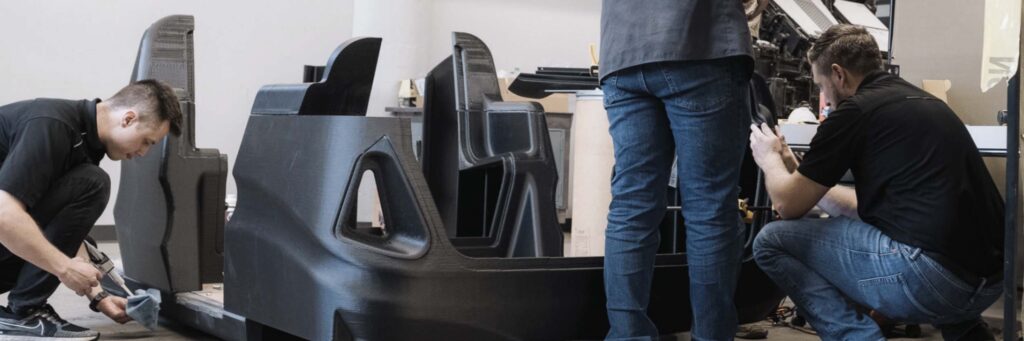
Process selection is often dictated by the conditions the finished part will withstand over a range of requirements. Thermoplastic LFAM proves a favorable starting point when high deposition rates and larger, near-net geometries are prioritized. Its more established processing ecosystem also simplifies the path from initial development to repeated production.
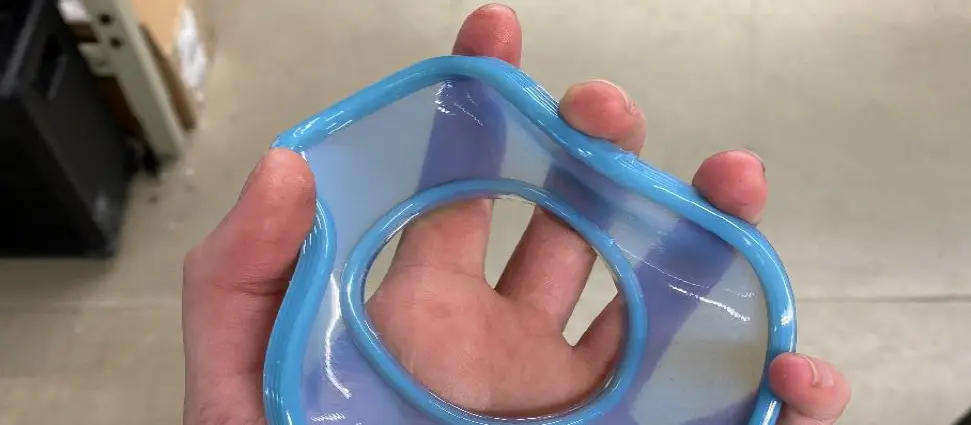
Thermoset LFAM becomes more compelling when the application depends on material behavior that melt processing cannot achieve. Reactive thermoset systems can be formulated for thermal performance, flexibility, or other specialized functions. Elastomeric materials such as silicones and urethanes may also be deposited without elevated processing temperatures required by conventional thermoplastics. Chemical crosslinking can also produce stronger bonding between deposited layers and isotropic properties, though reinforcement and bead orientation may still create directional properties.
Where Each Process Fits in Production
The production roles of thermoplastic and thermoset LFAM are not separated by a clean boundary. These technologies can produce tools, structures, and end-use components, but they reach those applications through ultimately different material and processing advantages.
Thermoplastic systems are well suited to large near-net shapes parts that benefit from high deposition rates and secondary machining (when applicable). This includes, and is not limited to, composite tooling, patterns, jigs, fixtures, vehicle structures/components, construction forms, and large prototypes. Thermoset systems become attractive to users when the deposited material must provide the desired chemical resistance, flexibility, improved layer bonding or application-specific thermal performance where thermoplastics fall short. Potential uses include seals & gaskets, corrosion-resistant infrastructure, lower coefficient of thermal expansion, high-temperature manufacturing assets, and reinforced composite structures. The part category alone does not determine the process. Several factors dial in the process approach, including operating environment, dimensional requirements, and production volume.
Comparing Material and Performance Requirements
Performance cannot be determined by a polymer family alone. A carbon-fiber reinforced thermoplastic and a carbon-fiber reinforced thermoset may respond very differently to heat, chemicals, and sustained mechanical loads, even when both are described as high-performance materials
Flexible materials provide another area of overlap. Thermoplastic elastomers such as TPU and TPE can be melted and extruded to produce flexible parts while retaining the processing and rework advantages of thermoplastics. Reactive silicones and thermoset polyurethane elastomers cure and offer different levels of temperature resistance, chemical stability, compression-set performance and elasticity.
The printing process must also be considered a part of the material system. Bead orientation, reinforcement alignment, porosity and interlayer bonding can cause a printed structure’s properties to differ from those produced through traditional methods. Due to this, qualifications should rely on representative printed materials rather than the base data sheet. If specimen tests are not provided, services such as Material Testing & Assessment exist to fill that gap.
It’s also worth noting that there are far more options available for thermoplastic materials in LFAM. While the number of thermoset materials available are growing, there are far less suppliers and options available that are marketed towards LFAM.
Throughput, Changeover, and Production Workflows
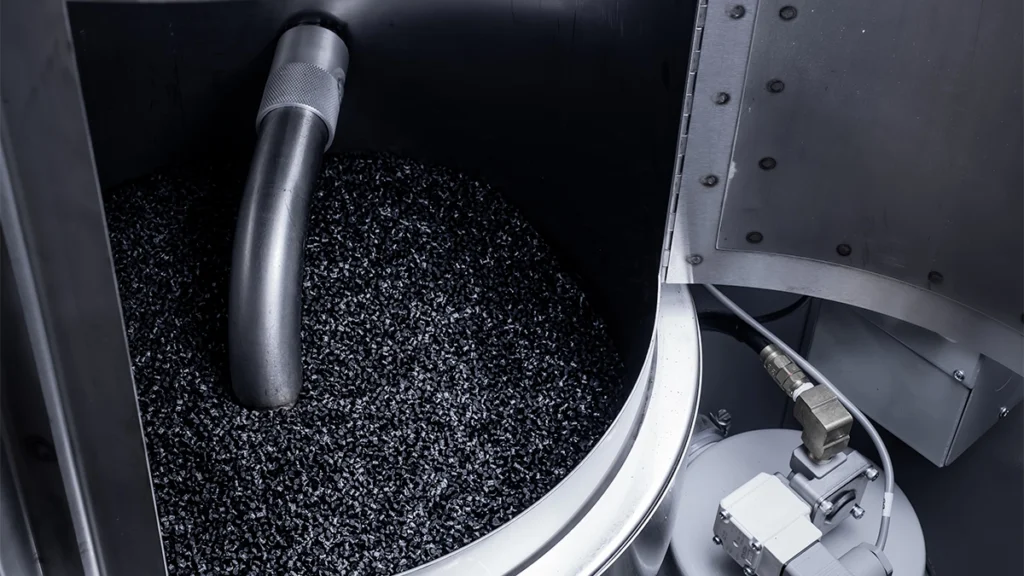
Increased deposition rate does not automatically translate to a shorter manufacturing cycle. Thermoplastic LFAM lays down material quickly but also includes pellet drying, machine calibration, and potentially secondary machining . Material changeovers can be purged and moved over to other polymer families when facilities expect to run multiple materials or applications on the same equipment. This process is comparatively straightforward when compared to thermoset systems.
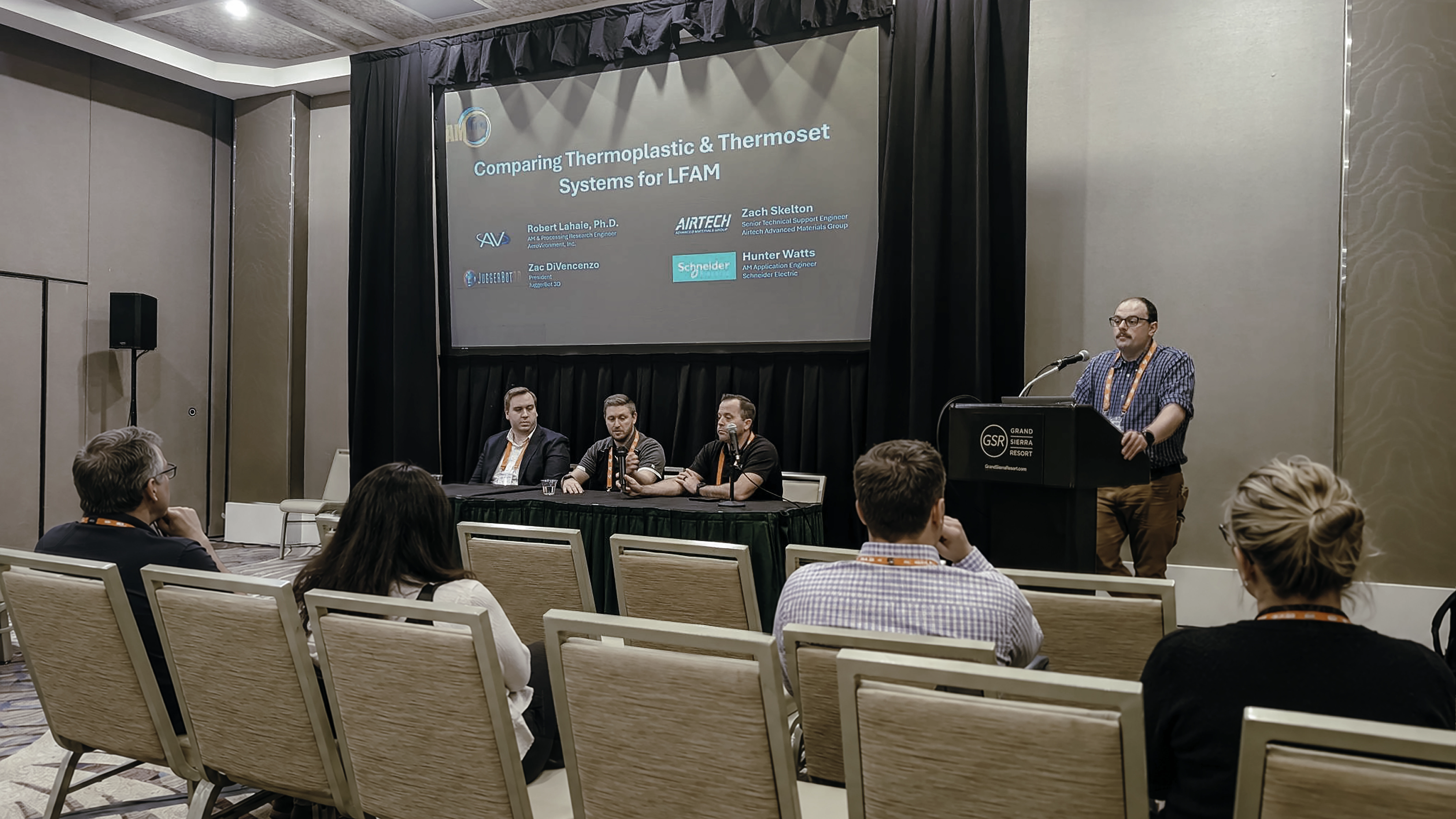
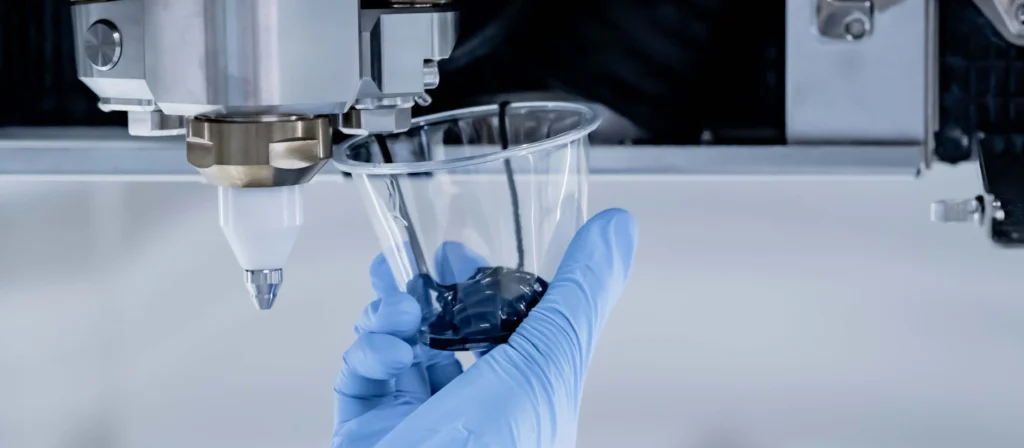
Thermoset changeover becomes more involved because the resin, hardener, and other reactive components travel through the dispensing system before mixing and deposition. At a panel focused on comparing these systems at the Additive Manufacturing Users Group Annual Meeting (AMUG) 2026, JuggerBot 3D President Zachary DiVencenzo explained, “Cross-contamination presents a greater concern in changeover. Some formulations may require different hardware when mix ratios change. Pumps, hoses, and mixers may also become consumable components of the process. These requirements do not prevent thermoset production, but they favor deliberate material planning and may encourage systems dedicated to a narrower family of material formulations”.
Quality Control, Standards, Repeatability, Technology Readiness
Stemming back to the AMUG panel, the group identified production-scale data as a common gap across LFAM. Existing standards often need adaptation because results from molded material or small laboratory specimens may not represent a large-format print. Even the method used to create a test sample carries weight. A separately printed coupon can experience different deposition conditions than material taken directly from the part.
They went on to frame technology readiness around three questions: Is the hardware ready? Can the software support the process? Are qualified materials available with reliable data? Thermoplastic LFAM currently has the more mature ecosystem, while thermoset deposition/DIW remains more dependent on specialized hardware and material knowledge. For either process, repeatability must be demonstrated through the complete material, machine, and application relationship.
Letting the Application drive the Technology Decision
Selecting LFAM systems extends past comparing build volumes or data sheets. Potential users must consider how the material will be stored, deposited, controlled, and qualified before it becomes a production-ready print. Thermoplastic LFAM offers maturity, higher throughput, and material flexibility, while Thermoset LFAM creates opportunities where reactive chemistries and enhanced material properties provide a meaningful advantage. The strongest process satisfies the application while supporting a repeatable, practical manufacturing process.